
We took part in a second exchange visit with a Romanian delegation [editar]
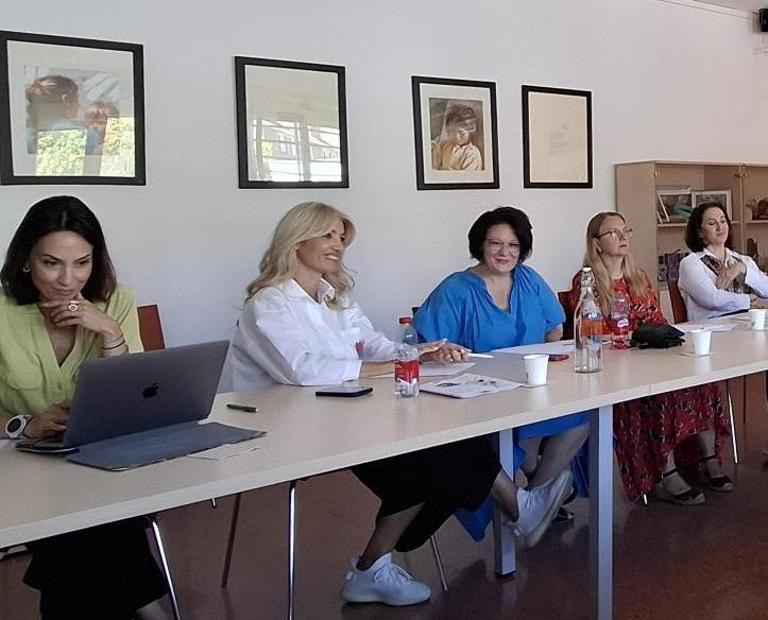
This second visit follows on from the previous meeting held in Spain, during which representatives of the Romanian government were able to gain first-hand insight into the methodology, track record and results of the Acceder programme run by Fundación Secretariado Gitano, as well as its intervention model designed to promote the integration of Roma people into the labour market.
The new exchange took place as part of an exchange programme supported by the European Commission and aimed at promoting the socio-economic inclusion of Roma communities through the employment access pathways of the Acceder Programme, under the TAIEX-TSI instrument and with the support of the European Commission. Its aim is to facilitate the exchange of good practices between Spain and Romania and to contribute to the design of tools that will improve the Romanian Roma population’s access to stable employment, strengthen their professional skills and advance their socio-economic inclusion.
The inclusion of the Roma community within the framework of the minimum income
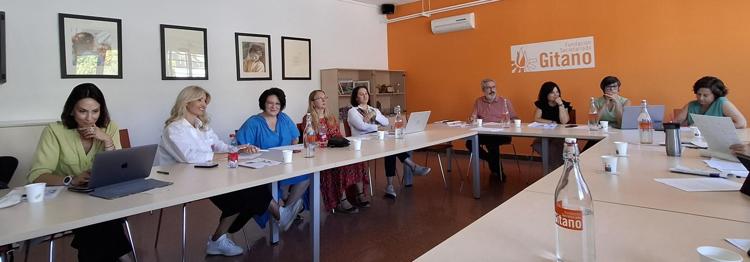
A particularly significant part of this second visit took place on 10 September at the Ministry of Social Rights, Consumer Affairs and the 2030 Agenda, where a session was held focusing on the institutional framework for equality for the Roma population in relation to minimum income policies.
During this session, the Spanish and Romanian delegations exchanged views on their respective social protection systems. The Romanian delegation presented the main elements of its legislation on the minimum inclusion income and the issues being taken into account with a view to the future planning of policies for the inclusion of the Roma population.
On the Spanish side, the discussion focused on the design process and institutional coordination of the Minimum Living Income (IMV), its development and the main challenges relating to its implementation. Representatives from the Ministry of Inclusion, Social Security and Migration and the Fundación Secretariado Gitano took part in this session, during which we shared the findings of the study ‘Study on the impact of the Minimum Living Income on poverty among the Roma population in Spain’. We presented our experience and knowledge regarding the situation of the Roma population and the challenges that remain in ensuring that such social protection policies effectively reach those in the most vulnerable situations. Our participation in this session enabled us to contribute to the discussion the perspective of an organisation with extensive experience of working directly with the Roma population and monitoring public policies on social inclusion.
The Acceder Programme: An in-depth look
The second day, held on 11 September, focused in greater depth on the aspects most directly related to the Acceder programme. Representatives from the Spanish and Romanian administrations analysed the programme’s funding and implementation mechanisms, as well as the selection and management procedures and indicators used in Spain during the early stages of Acceder. Representatives from the European Social Fund Plus Managing Authority and the Ministry of Social Rights, Consumer Affairs and the 2030 Agenda also took part in this exchange.
The Romanian delegation then travelled to the headquarters of Fundación Secretariado Gitano in Madrid, where a working session specifically dedicated to the methodological aspects of Acceder was held. During this meeting, issues such as the identification of professional skills and qualifications, training and accreditation processes, the eligibility of actions under the European Social Fund, and the involvement of private companies in qualification and employment access processes were discussed. FSG also shared the methodology relating to the role of the Acceder intercultural agent, one of the elements of the programme’s intervention model.
This second visit marks a further step forward in the cooperation between Romanian institutions, Spanish authorities, the European Commission and Fundación Secretariado Gitano. Whereas the first visit was more of an introductory nature, this latest meeting has enabled us to explore in greater depth both social inclusion policies and income security measures.
At Fundación Secretariado Gitano, we particularly value the continuity of this cooperation process and the opportunity to share the experience we have built up over more than two decades in the field of labour and social inclusion for the Roma population, helping to ensure that policies and programmes which have proven effective can serve as a benchmark for developing responses tailored to other European contexts.
Links
- Fundación Secretariado Gitano welcomes Romanian delegation to share the experience of the Acceder employment programme
- Minimum Income in Spain must be better adapted to the profile of beneficiary families and generate opportunities for social, educational and employment inclusion
- Evaluation of the results and impact of the Acceder Programme 2000-2020