
We took part in the European Conference against Racism in Brussels [editar]
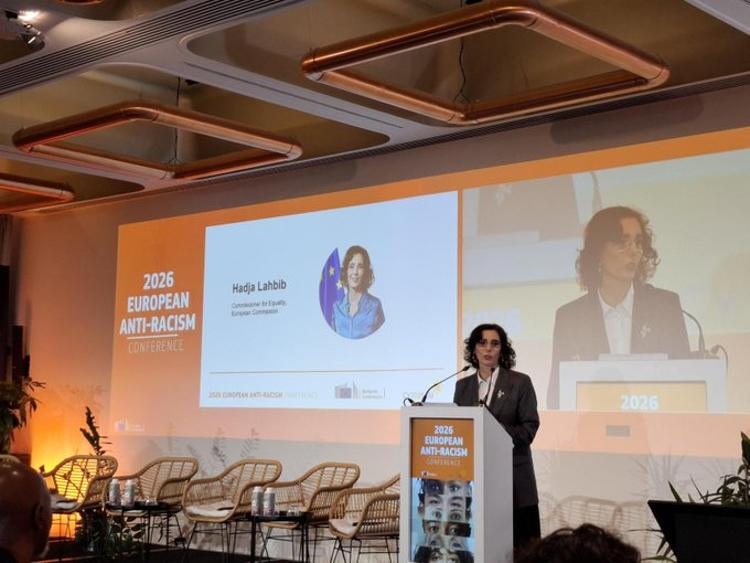
Policymakers, civil society representatives, and international organisations convened yesterday in Brussels for the European Anti-Racism Conference, a high-level event aimed at advancing the European Union’s efforts to combat racism and strengthen equality.
Organised by the European Commission, the conference took place on 17 March 2026 in a hybrid format, gathering around 250 in-person participants alongside a wider online audience. The event featured high-level panel discussions and thematic workshops designed to contribute to the development and implementation of the EU Anti-Racism Strategy for 2026–2030.
From EU Justice, the conference was framed as a key milestone: “the beginning of the next phase of EU action to tackle racism and strengthen equality across Europe.” This messaging reflects the EU’s broader ambition to move from strategy design to more concrete implementation measures in the coming years. Now the main actions is focus at natinal, with the future action plans against racism.
The discussions in Brussels focused on addressing persistent structural racism across European societies. Despite ongoing policy efforts, recent data suggests that racial discrimination remains a widespread concern among EU citizens, underlining the urgency of renewed political commitment and coordinated action.
A central element of the conference agenda was the forthcoming EU Anti-Racism Strategy 2026–2030. As highlighted in official communications ahead of the event, the strategy aims to build on previous action plans by strengthening cooperation between EU institutions, Member States, and civil society organisations. Stakeholders explored ways to enhance national action plans, improve data collection on discrimination, and ensure more inclusive policymaking processes.
Several workshops held during the afternoon sessions provided space for more targeted exchanges on key thematic areas, including equality frameworks, participation of affected communities, and the role of public institutions in combating discrimination. These sessions were designed to feed into future policy development and support the alignment of national and European-level initiatives.
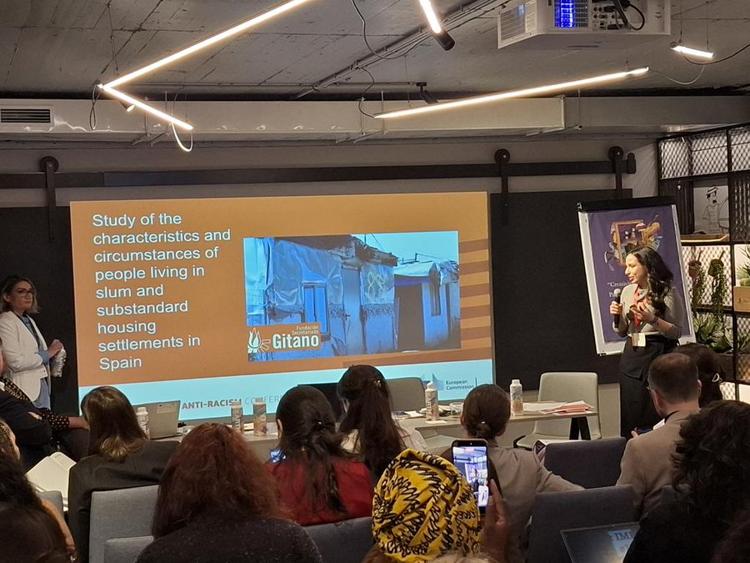
Fundación Secretariado Gitano joined as speaker one of this workshops tittled “Tackling Structural Racism: Building Social Cohesion through evidence and action”. We had the opportunity to present the findings of our study, ‘Study of the characteristics and circumstances of people living in slum and substandard housing settlements in Spain’, in which we provide data on the situation of informal settlements in Spain and how these are the result of structural racism.
We also put forward a series of recommendations for the creation of effective public policies, sustained investment and a clear commitment to dismantling these structures. In this regard, the forthcoming anti-poverty strategy represents a key opportunity to eliminate informal settlements once and for all. EU funding — including the ESF+, the ERDF and the Child Guarantee — must be fully mobilised to drive real and lasting change.
The timing of the conference is also significant, taking place just days before the International Day for the Elimination of Racial Discrimination on 21 March.
During the Conference several civil society actors called for stronger support and greater inclusion in policymaking processes, particularly in light of ongoing challenges related to structural inequalities and shrinking civic space in some contexts.
Overall, the Brussels conference underscored a renewed momentum within the European Union to address racism in a more systemic and coordinated manner. By bringing together a diverse range of stakeholders and launching discussions on the next strategic cycle, the event set the stage for further policy developments in the months ahead.