

The European Commission presents the European Affordable Housing Plan, with key advances but no concrete measures against settlements [editar]
The European Affordable Housing Plan recognises that access to decent and affordable housing has become a structural social problem that threatens cohesion and equal opportunities.
The document establishes housing as a fundamental right and proposes a series of measures organised into four main areas: increasing the supply of social and affordable housing, mobilising public and private investment, providing immediate support to areas and markets under pressure through structural reforms, and protecting the most affected groups, such as young people, students, essential workers and homeless people, as well as disadvantaged groups such as the Roma population, among others.
Key initiatives include promoting the construction and renovation of affordable housing, reducing administrative barriers, regulating short-term rentals in areas with high residential pressure, combating property speculation and creating new European financial instruments. The Plan also strengthens European governance on housing through the creation of a European Housing Alliance and the holding of a European Housing Summit in 2026.
The Plan has its own website.
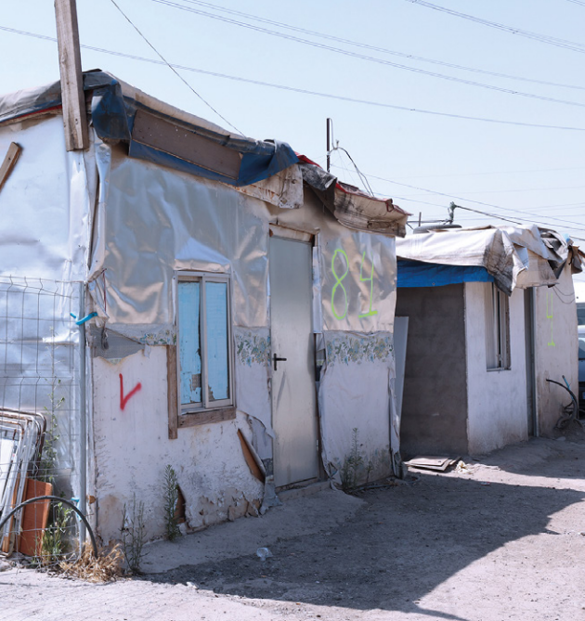
At Fundación Secretariado Gitano, we value this initiative as an important step in the fight for access to decent housing for all. However, we would like to point out a significant shortcoming: the absence of any explicit reference to the problem of slum and substandard housing. The document does not specifically address the reality of thousands of people living in precarious settlements, without access to basic services and in a situation of high social vulnerability.
Slum and substandard housing represent one of the most extreme forms of residential exclusion in the European Union and disproportionately affect the Roma population. The lack of explicit recognition of the situation may hinder access to European funding and perpetuate fragmented or insufficient responses.
In order to fully comply with the principles of the European Pillar of Social Rights, the Plan should incorporate clear objectives and specific tools for the eradication of slums, integrating policies on housing, social inclusion and the fight against discrimination. Its real impact will depend on ensuring that, in its implementation and future development, those living in the most serious situations of residential exclusion are not left behind, guaranteeing that the right to decent housing is effective for all people, without exception.