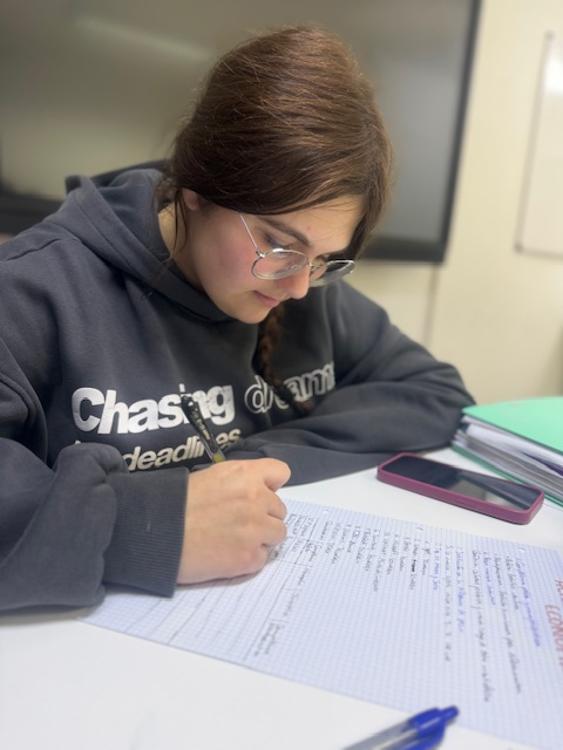

We present data from our education programmes and call for active policies to advance educational equity [editar]
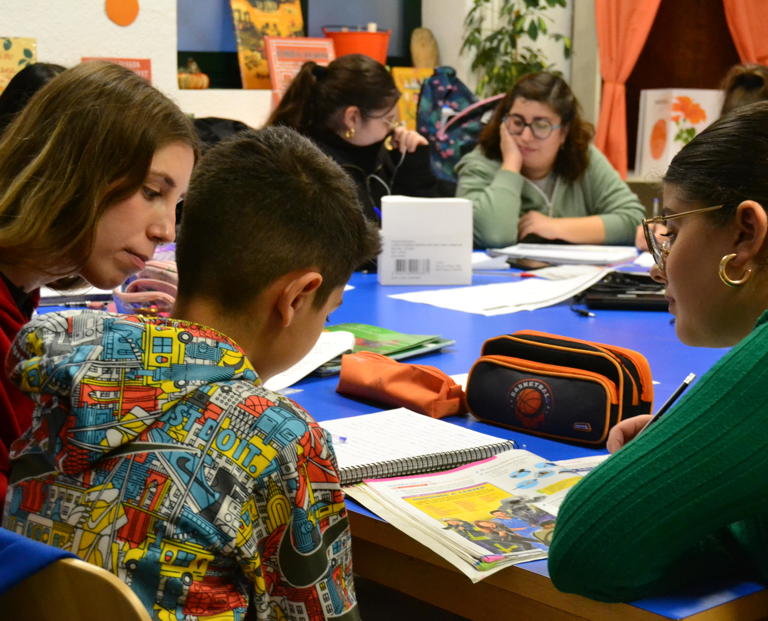
During the 2024–2025 academic year, these programmes have supported 5 840 students in 65 locations
Fundación Secretariado Gitano (FSG) programmes are demonstrating a real and sustained impact, with thousands of students improving their performance and continuing their studies. However, structural data continues to show profound educational inequality that requires comprehensive, sustained and specific public policies to ensure real equality of opportunity.
During the 2024–2025 academic year, FSG programmes (Promociona, Promociona-T and Promociona +) have supported 5 840 students in 65 locations.
In the context of International Day of Education, UNESCO is highlighting in 2026 the importance of young people actively participating in building the future of education. FSG shares this vision and also promotes socio-educational participation so that Roma students have access to spaces where they can lead processes of reflection on the educational inequality they suffer.
Promociona: greater academic success and continuity
During the 2024–2025 academic year, the Promociona education programme, whose main objective is to support Roma students obtain their Compulsory Secondary Education Certificate, has served 1 854 students in 51 locations. Its key actions include direct coordination with 612 educational centres and extracurricular support with more than 100 Promociona Classrooms in which 1 729 students have participated.
The results show that, in primary school, 97% of students pass the year and 58% pass all subjects. In secondary school and basic vocational training, 78% of students pass the year and 48% pass all subjects. In terms of qualifications, 84% of Promociona students obtain their Compulsory Secondary Education Certificate and 91% continue their studies beyond compulsory education. Since the 2008–2009 academic year, when Promociona began, more than 2 400 young people have obtained their Compulsory Secondary Education Certificate.
Promociona‑T: prevention of early school leaving
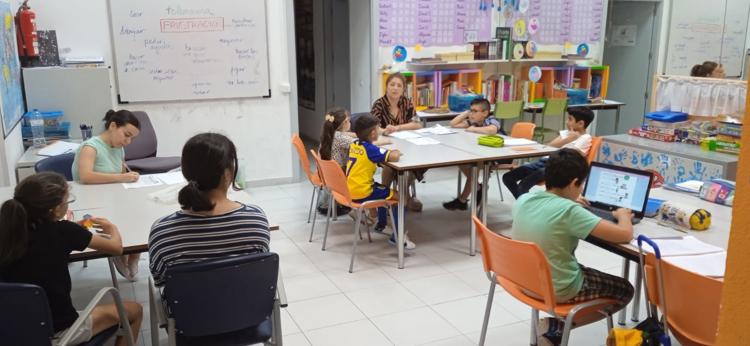
With the Promociona-T programme, FSG prevents curriculum gaps, absenteeism and early school leaving. Last year, it supported more than 3 300 students in 60 locations, set up 278 school reinforcement groups in which 2 794 students participated, and provided individual guidance to one in three families. In primary school, 94% of students pass the year and 61% pass all their subjects, while 93% of sixth-year students move on to secondary school. In secondary school, 72% pass the year and 40% of those pass all their subjects. Although it is not its main objective, 74 students from Promociona-T have obtained their Compulsory Secondary Education Certificate.
In addition to educational guidance and academic support, training in digital skills is one of the priority actions in the educational intervention of these programmes.
Promociona+: more and more young Roma in higher education
The Promociona+ programme focuses on achieving continuity in post-compulsory education through its own scholarships, academic guidance and support, and participation in specific initiatives such as the ‘Fundación Secretariado Gitano - Luis Sáez’ scholarship project, the Diploma of Specialisation in Social Intervention with the Roma Community with the University of Navarre (UPNa), and the Ambassadors for Education initiative.
In the 2024-2025 academic year, Promociona+ has supported 652 students in 54 locations. Its students are divided between 41% in intermediate vocational training, 20% in upper secondary education, 17% in advanced vocational training, another 19% in university studies and 2% in postgraduate or doctoral programmes. The graduation rate is 75% in post-compulsory education and 77% in advanced vocational training, with a particularly low dropout rate of 5%.
The importance of public policies
The results obtained by the three programmes show that specific, consistent and well-targeted measures can bring about real improvements in the educational situation of Roma students by promoting their academic success. However, the data continue to show profound educational inequality. The structural gap remains wide and requires more ambitious and sustained public policies aimed at eliminating the barriers that still prevent many Roma children and young people from enjoying their right to inclusive, quality education and equal opportunities.
The study ‘The educational situation of Roma students in Spain’ published by FSG in 2023 points out that the school life expectancy of Roma students is 12.2 years compared to 18.7 years for the general student population, reflecting the extent of a gap that begins at an early age.
Other data collected in the study indicate that 40% of Roma children have repeated a year before the age of eleven; the secondary school completion rate is barely 37.6% compared to 96% for the general population, and early school leaving stands at 86%, compared to 13.3% for the student population as a whole.
School segregation remains a structural challenge: one in three Roma students attends segregated schools and 28.3% enrol in basic vocational training, well above the 8% of the general student population. These indicators show that the right to quality education continues to be unfulfilled for a significant proportion of Roma students.
Luisa's testimony
Luisa García, from Jerez de la Frontera, is a 16-year-old Roma girl in her first year of upper secondary education. A student in the Promociona programme since the fifth year of primary school, she graduated from the fourth year of secondary school last year. The school recommended her for an Intermediate vocational training course but she was unsure. Her goal was to complete upper secondary education, but she did not feel capable of doing so. During the educational guidance sessions, her expectations and those of her parents were discussed at length. In the end, she decided to continue with her upper secondary education.
As Luisa herself points out, ‘What I discussed with my educational counsellor, Nazaret, during the tutorials helped me to get organised, to stay calm, to believe in myself and not to settle for less. She also spoke to my parents so that they knew how to support me. Everyone believed in me at all times. In the support classes, I was able to resolve any doubts I had about the subjects. Choosing what to continue studying is a very important decision, and I felt very supported, to be honest.’