
FSG takes part in the analysis of the National Roma Integration Strategies implementation [editar]
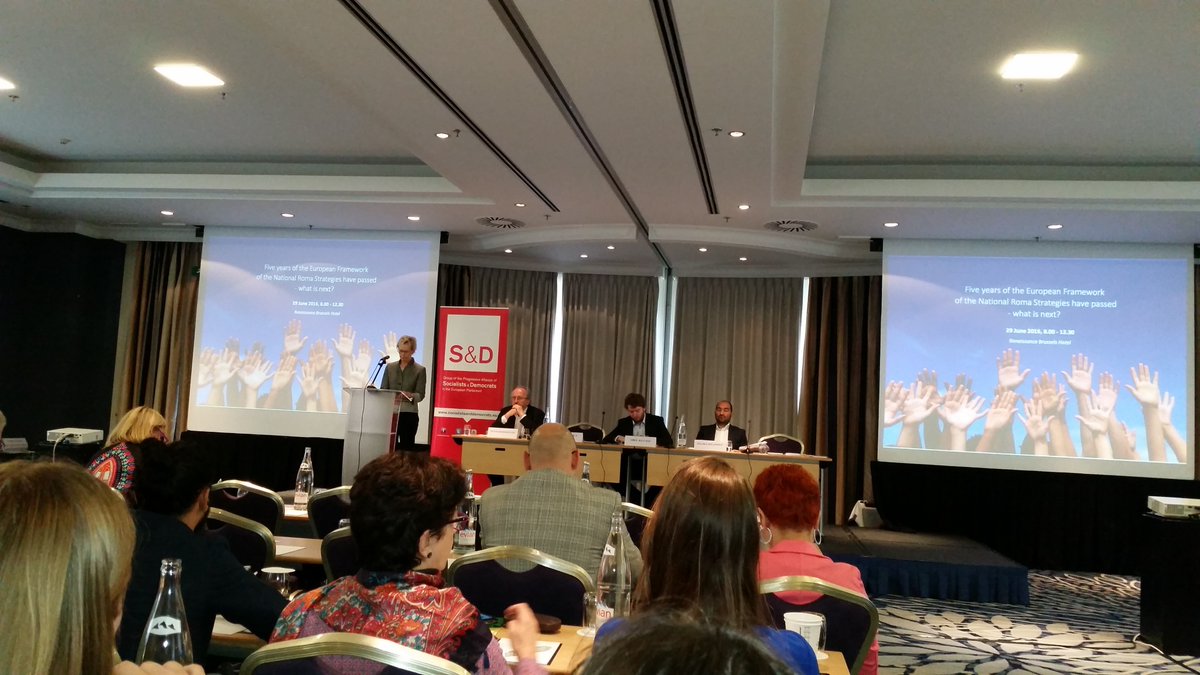
Last 29th of June took place in Brussels the conference 'Five years of the European Framework of the National Roma Inclusion Strategies have passed – what is next', organized by a group of MEPs with the objective of making a midway analysis of the implementation process of the European Framework of the National Roma Strategies up to 2020 and agreeing on proposals for the next few years.
This conference, to which attended around 150 people, occurred one day after the European Commission made public its annual report on these Strategies, underlining the slow advancements in the fulfilment of the objectives and stressing the great challenges still ahead. Director-General for Justice, Tiina Astola, was in charge of presenting the conclusions of the European Commission about this report. In addition to the 4 MEPs, promoters of this initiative, took part in the conference representatives of the European Commission, the World Bank, the European Union Agency for Fundamental Rights (FRA), and the present Slovak EU Presidency, as well as representatives of the civil society, including members of Open Society, Amnesty International, ERGO, and the Fundacion Secretariado Gitano.
The position of the FSG, invited to make an assessment of the local impact of these Strategies, was a greater involvement of local administrations in this process. There has been a stage in which the existence of these Strategies has been spread, now a bigger commitment is required, the undertaking by the Autonomous Communities and Town Hall Governments of the necessary contributions, with their policies and resources, to the attainment of the goals of the Strategies. In order to do this, it is proposed to strengthen the mechanisms of coordination and cooperation among the different levels of the administration, so that the political decisions taken by the local governments are in line with the objectives of the National Strategies.
The FSG recommended to launch a midway assessment of the Strategies at a national level, like the one that is expected to begin in Spain, so that the different agents, public as well as private, together with the civil society, can analyse the Strategies process, obtain their own lessons and get to an agreement on the next steps.
Unlike other institutions in the European area, the FSG favors the continuity of the Strategies, in spite of their deficiencies; in general, expectations are not being met, it is necessary to carry out modifications and improvements on the working and coordination mechanisms, but these Strategies are still the best framework-instrument we have to move forward in the integration and equality of opportunity for the Roma community. One of the main claims at a European level is that the fight against discrimination and Antiziganism is systematically introduce in the Strategies, and exactly so, it is necessary to include it, but without forgetting the need to progress in the four fundamental pillars for the improvement of the Roma people’s living conditions established by the European Framework: education, employment, health and housing.
In general, it seems that the programs financed by European funds are more in line with the objectives of the Strategies than the national policies and resources are.

Gallery