
We present a proposal for a comprehensive law on the recognition, equality and advancement of Roma people before the Constitutional Committee [editar]
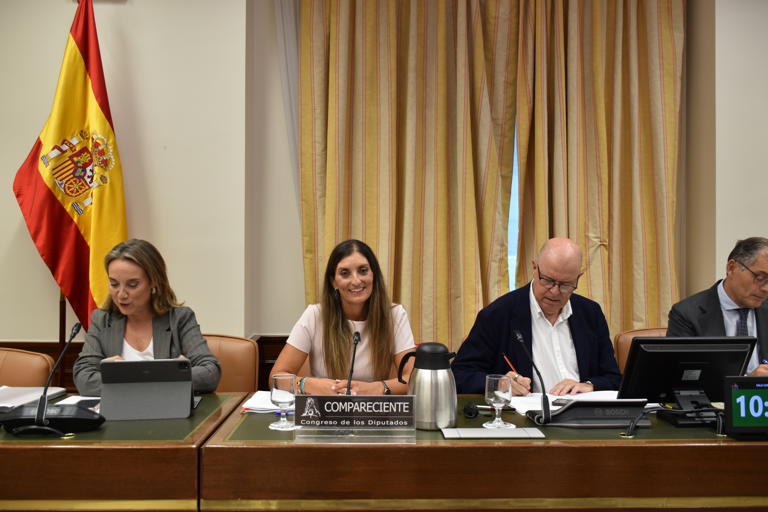
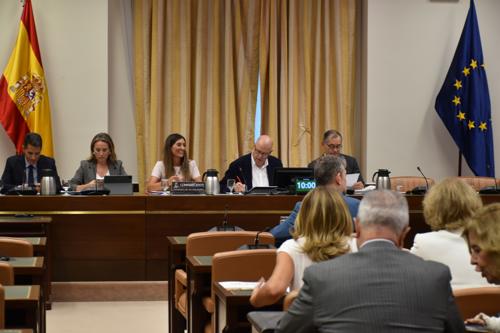
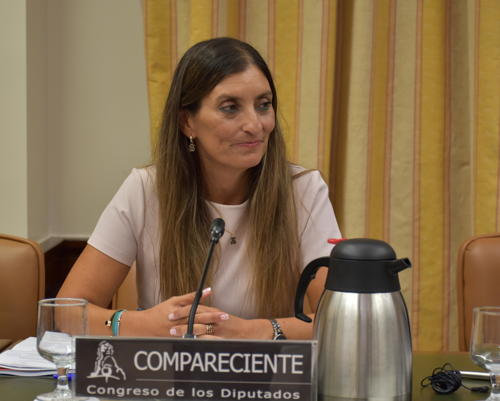
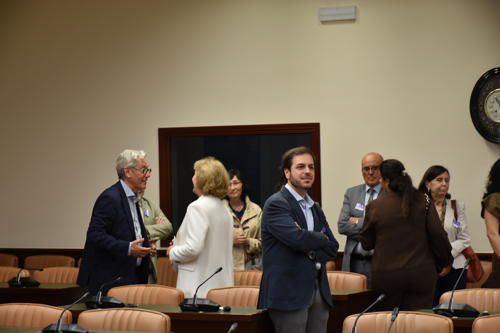
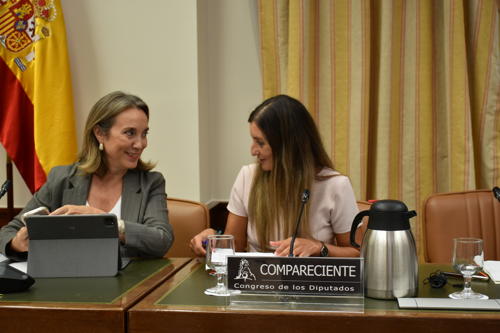
Sara Giménez, Director General of Fundación Secretariado Gitano (FSG) and former Member of Parliament, appeared before the Constitutional Committee of the Spanish Congress on Tuesday 29 September to present a proposal for a Comprehensive Law on the Recognition, Equality and Advancement of Roma People. The purpose of the proposal is to provide a legal framework that safeguards the effective exercise of rights already recognised under Spanish law and to ensure that Roma people are accorded the place they rightfully deserve.
The proposal was publicly launched on 8 April 2025, International Roma Day. Since then, FSG has focused, on the one hand, on translating the initiative into a draft legal text developed with a group of Roma and non-Roma experts, both from within and outside the organisation, through seminars, meetings, working groups and consultations. On the other hand, FSG has worked to open the way for its parliamentary consideration, holding preliminary meetings with all parliamentary groups to promote an appearance before the Constitutional Committee of the Congress and formally present the proposal.
At the start of the session, the Chair of the Committee, José Zaragoza, highlighted the broad political consensus surrounding the appearance, noting that “in recent times, we have rarely seen such broad agreement among the different groups regarding the wish for this appearance to take place”. Sara Giménez expressly thanked the Committee for this support.
The session began with an opening statement by Sara Giménez, in which she presented the legislative proposal. This was followed by interventions and questions from representatives of the different parliamentary groups.
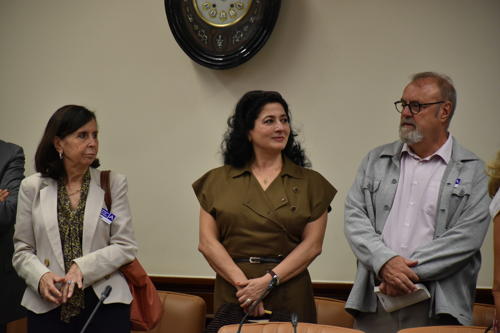
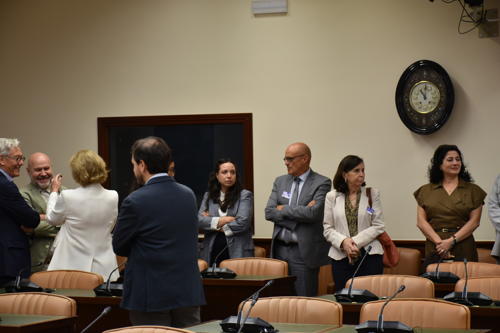
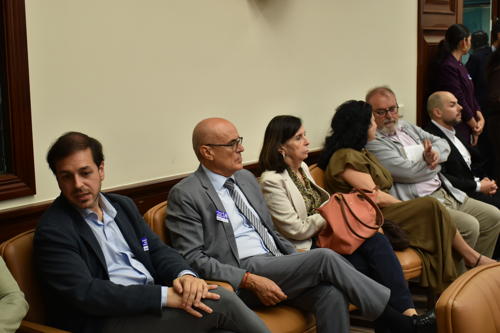
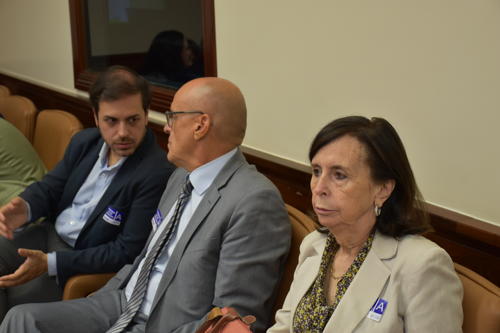
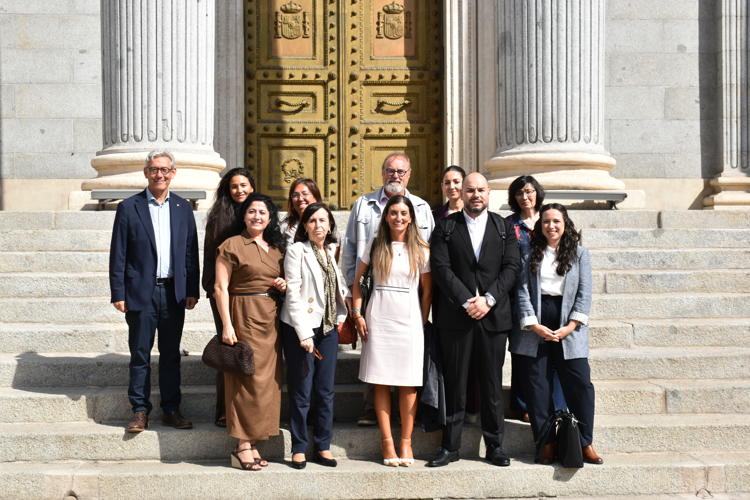
FSG was accompanied at the hearing by several members of the Group of Experts, including Carla Santiago, former Senator and Second Vice-President of FSG; Luis Cayo, President of the Spanish Committee of Representatives of Persons with Disabilities (CERMI); Manuela Fernández, former Director of the Office for Equal Treatment and Non-Discrimination of the Government of Catalonia; María Emilia Casas, jurist, the first woman to serve as President of the Spanish Constitutional Court and currently a member of the Council of State; Fernando Rey, Professor of Constitutional Law and member of the FSG Board of Trustees; Miguel Ángel Aguilar, Chief Prosecutor for Hate Crimes and Discrimination at the Office of the Spanish Prosecutor General; José Antonio Jiménez, police officer; and Ramón Mateo, of beBartlet.
Three pillars
In her appearance, Sara Giménez set out three pillars underpinning the legislative proposal.
First, the law enshrines the rights to social advancement and effective convergence with society as a whole, guaranteeing access, under conditions of genuine equality, to the essential services required for the effective exercise of basic social rights.
Second, it establishes a robust framework for protection against discrimination and for firmly tackling anti-Roma discrimination.
Third, it institutionalises the formal recognition of Roma people, giving legal protection and recognition to their cultural, historical and linguistic heritage, as well as recognising their official symbols, language and beliefs and their contribution to Spanish society. At the same time, it consolidates stable mechanisms for participatory governance and coordination between public administrations, which are essential to ensuring the law’s effective implementation.
As Sara Giménez explained:
“The proposal, developed with sound judgement and legal rigour, follows the same approach as other specific laws already in place in Spain for groups facing complex realities and which already benefit from their own legal protection frameworks. The initiative seeks to guarantee constitutional rights for more than one million Roma citizens and to transform international recommendations into legally binding obligations.”
The Director General of FSG described the proposal as:
“An act of justice and recognition of the dignity of a people who, after centuries of coexistence but also persecution, have maintained their determination to be part of Spain’s shared national project without renouncing their own identity and culture.”
She added that the context giving rise to the law is defined by:
“The maturity of our democracy and the recognition that formal equality before the law is insufficient unless it is accompanied by specific measures capable of removing barriers and making substantive equality a reality.”
The purpose of the law
The law seeks to promote the conditions required to guarantee equitable and equal access to public goods, services and rights, eliminating existing gaps in education, employment, health, housing and social welfare.
It is also a law aimed at institutional empowerment, designed to ensure that Roma people themselves are central actors in their own economic, social and political development.
To date, public policies aimed at Roma people have relied on action plans, temporary programmes and government strategies without statutory status, leaving them vulnerable to budgetary constraints and often limited funding.
As Sara Giménez explained:
“Giving these policies the force of law provides them with permanence, guarantees of implementation, adequate funding and legal certainty, bringing active social advancement and the comprehensive fight against anti-Roma discrimination together within a single, coherent legal framework.”
She added:
“This law will enable us to address the challenge of education so that our children can succeed academically and reach whatever goals they set themselves; to tackle employment so that higher employment rates can lead to access to quality jobs; and, of course, to protect and help modernise street trading, which is honest work and the livelihood of thousands of families.”
A first institutional step
The Director General of FSG stressed that, although the proposal represents “an undeniable step forward towards equality”, it is only a starting point.
Following this appearance, the next stages of the roadmap include sharing and working on the draft with different stakeholders from the Roma associative movement and with Roma communities themselves.
A law that makes us a better society
Beyond its direct impact on Roma people, this law would represent progress in terms of social cohesion and the strengthening of Spanish democracy.
By addressing the structural causes of inequality, the initiative would help reduce disparities that affect society as a whole, contribute to building a fairer and more inclusive model for all citizens, and strengthen both the rule of law and public trust in institutions.
Related documents
-
Borrador de la propuesta
PROPOSICIÓN DE LEY INTEGRAL PARA EL RECONOCIMIENTO, LA IGUALDAD Y LA PROMOCIÓN DEL PUEBLO GITANO EN ESPAÑA
Gallery