
Together with the National University of Distance Education, we are launching a pioneering programme to enable Roma to access university [editar]

Ten students, who have been selected and awarded scholarships, will receive support and specialised tutoring during the 2026–2027 academic year to prepare for the university entrance exam for those aged 25 and over.
Fundación Secretariado Gitano and the University Access Service of the National University of Distance Education (UNED) have launched a preparation and support programme to enable Roma people aged 25 and over to access higher education. This is the first nationwide initiative to offer specific support to this group during the university entrance course.
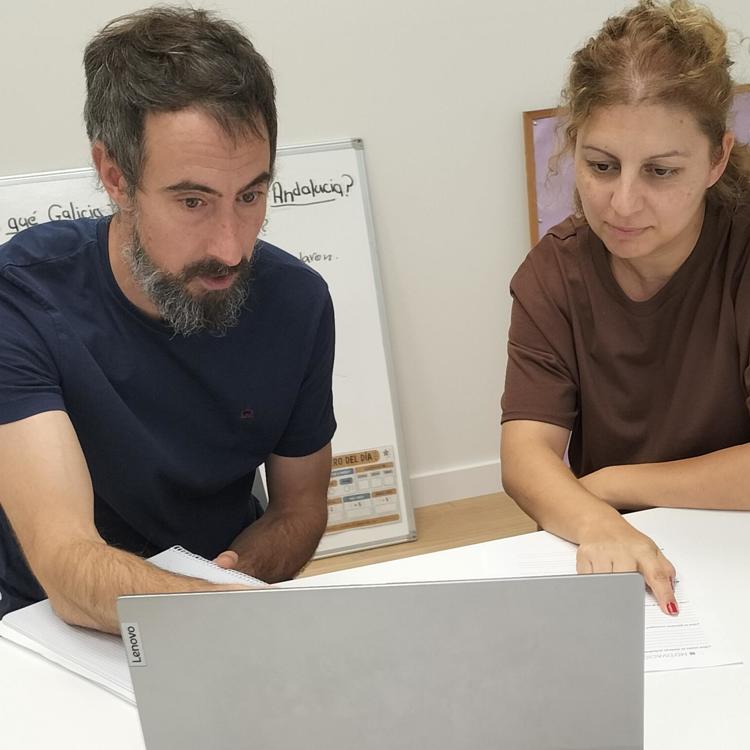
The project goes beyond simply covering the costs of tuition fees and teaching materials. It includes personalised support, a dedicated space on the Ágora virtual platform, face-to-face tutorials at the UNED centre closest to each student’s home, and study techniques tailored to adults returning to education. For its part, FSG designs an individualised work plan for each student, which is implemented through tutorials that include priority and complementary activities.
The ten participants were selected through a process that took into account their socio-family, economic and employment circumstances, as well as their educational background.
A gap that begins before university
The initiative addresses an inequality that accumulates throughout the educational journey of many Roma people. According to the report The Educational Situation of Roma Students in Spain (FSG, 2023), 62.8 per cent of young Roma aged between 16 and 24 do not complete Compulsory Secondary Education, compared with 4 per cent of the general population. This gap persists at university level: only 1.6 per cent of the Roma population aged between 18 and 24 go on to higher education, compared with 31.5 per cent of the general population.
‘This type of project aims to combat structural inequality and opens up opportunities for Roma who, during their lives, have faced difficulties and barriers that led them to drop out of education prematurely, and who now wish to resume their studies,’ says Sara Giménez, Director-General of the FSG.
Supporting students right up to the entrance exam
The project stems from the collaboration that UNED lecturers Juanjo Villalón and Yayo Aznar began years ago with FSG. The university provides the preparatory course, the teaching teams, the Ágora platform and its network of centres. Funding comes from the Ministry of Social Rights, Consumer Affairs and 2030 Agenda, through a call for grants funded by Income Tax.
Since its inception, the UNED’s mission has been to make higher education accessible to all citizens and to offer a second chance to those who were unable to follow the standard route. This programme extends that commitment to the group facing the greatest educational exclusion in the country. This is emphasised by José Óscar Vila, Deputy Vice-Chancellor for University Access: ‘This programme supports these ten people at a decisive moment in their journey and, at the same time, enables us to build an assessable and replicable model that can be extended to other regions and groups facing educational vulnerability. Its true impact extends beyond these ten places, because every student who completes this programme can become a role model within their community.’
At the end of this first edition, the evaluation will assess how many people complete the course, pass the entrance exam and subsequently enrol on a degree programme, as well as how the students and the teams involved rate the experience. The results will be used to decide whether the programme should be consolidated and expanded in future academic years. Until then, the challenge is a shared one: the UNED and FSG provide the resources and support, whilst the ten participants contribute their efforts.