
FSG participates in a European event in Athens on preventing the social exclusion of disadvantaged groups [editar]
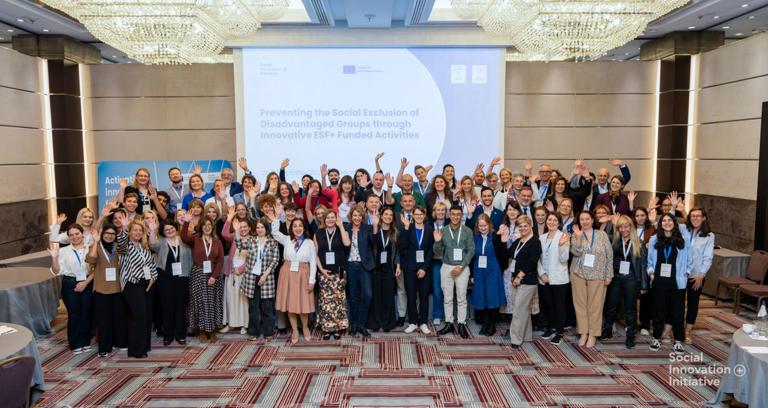
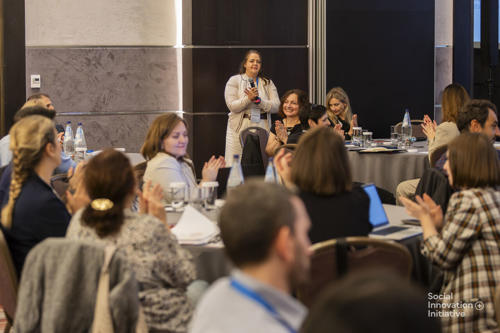
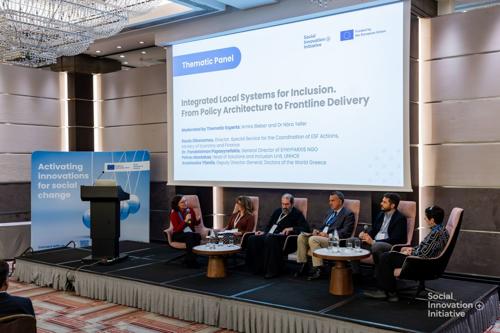
Fundación Secretariado Gitano (FSG) took part in the ‘Preventing the Social Exclusion of Disadvantaged Groups through Innovative ESF+ Funded Activities’, organised jointly by the ESF+ Communities of Practice on Migrant Integration and on Social Inclusion, held in Athens on 21-22 October 2026.
The event brought together representatives of public authorities, international organisations, civil society organisations and professionals from across Europe to exchange experiences on preventing social exclusion through integrated approaches supported by the European Social Fund Plus (ESF+). Discussions explored how innovative ESF+-funded initiatives can improve access to mainstream services and strengthen inclusion pathways for disadvantaged groups. Among the issues that emerged as particularly relevant were the impact of multiple and intersecting forms of discrimination on social exclusion, and the need for coordinated responses involving public institutions, civil society organisations and stakeholders across local, regional, national and European levels.
Participants repeatedly highlighted that tackling social exclusion requires both adequate funding and effective implementation. In this regard, ESF+ resources were recognised as a key instrument for supporting innovative and integrated approaches, while strong cooperation among the organisations and institutions responsible for delivering them was seen as equally essential to achieving meaningful and lasting impact.
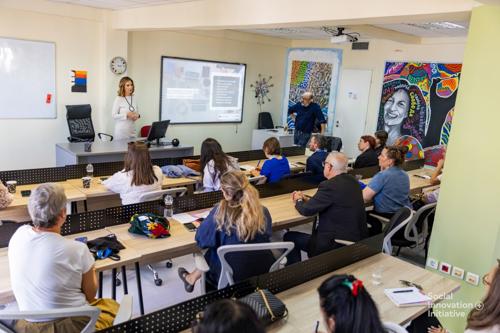
As part of the programme, FSG participated in a study visit to the I Paidiki Stegi Foundation, which provides care, protection and educational support for children from infancy to four years of age, with particular attention to families with limited financial resources and refugee backgrounds. The visit offered an opportunity to learn about approaches aimed at improving access to quality early childhood education and care (ECEC), an area of particular relevance for Roma inclusion given its role in promoting equal opportunities and supporting successful educational pathways from an early age.
For FSG, participation in the event was an important opportunity to contribute a Roma inclusion perspective to broader European discussions on social inclusion, learn from innovative practices being developed across Europe and strengthen cooperation with stakeholders committed to combating poverty, discrimination and exclusion. The event also provided a valuable space to underline the importance of ensuring that Roma people are fully considered within wider strategies aimed at supporting disadvantaged groups.
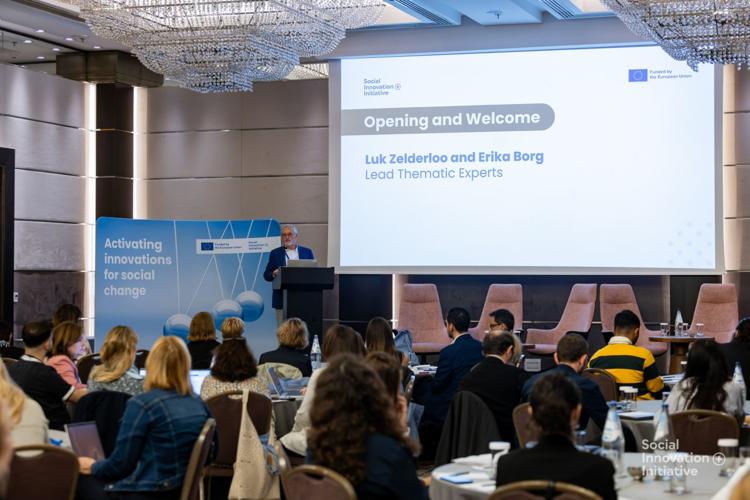
About the ESF+ Communities of Practice
The ESF+ Communities of Practice are transnational platforms that bring together managing authorities, intermediate bodies, implementing organisations and other stakeholders to exchange knowledge, share good practices and promote mutual learning on key social policy challenges across Europe. They are supported by the European Competence Centre for Social Innovation under the European Commission's Social Innovation+ initiative.
FSG is currently a member of the Community of Practice on Social Inclusion, which focuses on issues such as child poverty, homelessness and social inclusion, and of the Community of Practice on Employment, Education and Skills, which promotes exchanges on employment, education, skills development and labour market inclusion for vulnerable groups.
Gallery