
Dublin to host the 19th European Platform for Roma Inclusion, focusing on education and employment [editar]
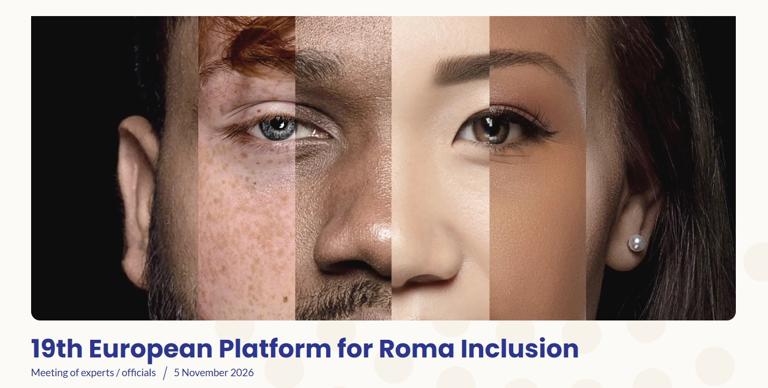
On 5 November, Dublin will host the 19th European Platform for Roma Inclusion, under the theme “Breaking Barriers, Building Futures: Participation in Education and Employment”.
The European Platform is one of the main forums for dialogue and cooperation on policies promoting Roma equality, inclusion and participation in the European Union. Organised by the European Commission, it regularly brings together representatives of European institutions, national governments, international organisations and civil society to share experiences, review progress and discuss the main challenges that remain.
This year's event will take place in Dublin during the Irish Presidency of the Council of the European Union, which runs throughout the second half of 2026 and is jointly organising the event with the European Commission.
Education and employment at the heart of the discussions
This year's Platform will focus on two key areas for advancing equal opportunities for Roma people: education and employment. Particular attention will be paid to the links between these two areas and the need for a comprehensive approach to tackling inequalities.
The Discussion Paper prepared for the Platform highlights some of the main achievements and challenges in these areas, drawing on several sources, including the findings of the EU Agency for Fundamental Rights (FRA) Roma Survey 2024.
The data show that, despite some progress, significant inequalities remain. Only 32% of Roma young people aged 20–24 have completed at least upper secondary education, compared with 84% of the general population. In terms of employment, 54% of Roma aged 20–64 are in paid work, a figure that falls to just 38% among Roma women.
The paper also highlights the persistence of school segregation, discrimination and barriers to accessing quality employment. It emphasises the importance of developing policies that link education, training and access to the labour market, with particular attention to Roma young people and women. Among the initiatives mentioned is the Fundación Secretariado Gitano's Acceder programme, presented as an example of an initiative aimed at improving skills and employment opportunities.
Sharing experiences and strengthening commitments to Roma inclusion
Throughout the event, participants will discuss experiences and good practices in education and employment, the main barriers that continue to hinder equal opportunities, and the political commitments needed to overcome them.
Another key topic will be the future of European funding for Roma inclusion, particularly in the context of negotiations on the next Multiannual Financial Framework 2028–2034 and the development of future national and regional investment plans.
The Platform will also devote specific attention to the participation of Roma people in education and employment policies, as well as to the measures and resources needed to achieve sustainable results.
The event aims to strengthen European and national commitments within the framework of the EU Roma Strategic Framework for Equality, Inclusion and Participation 2020–2030, highlighting the importance of combining effective public policies, adequate funding and meaningful participation of Roma communities.